-
The Environmental Peacebuilding Association: Year in Review and What’s Ahead
With a reduction in capacity of bilateral and multilateral institutions and a broader political retreat from environmental protection and peacebuilding, environmental peacebuilding reached a turning point in 2025. This was the conclusion of leading experts who spoke at The Year in Review and the Year Ahead webinar hosted by the Environmental Peacebuilding Association, as they reflected on the mounting constraints posed by this altered landscape.
Rather than merely focusing solely on weathering the current challenges, these speakers also suggested that environmental peacebuilding could use this moment to center community-based research, diversify funding sources, and strengthen the evidence base needed to influence policy in a more skeptical political climate.
The webinar conversation also underscored the wider forces accelerating this inflection point, including how the expansion of artificial intelligence intensifies competition for water, and the scramble for critical minerals deepening extraction pressures in conflict-affected contexts. To add to the larger concerns in the field, these worrying trends are unfolding alongside rising militarization and a de-prioritization of global cooperation.
Rising Conflict: Restricted Resources and Amplified Importance
The year 2025 saw a reduction in funding supporting civil society, climate action, and peacebuilding in a moment when defense funding increased. Ashok Swain, a professor of peace and conflict research at Uppsala University, noted that even Sweden (long associated with climate reform and demilitarization) has deprioritized funding for the environment and peace as it increases defense spending through institutions such as the Swedish Defence University.
The global resurgence in militarism coincides with rising worldwide conflict, which has been marked by a 27% year-over-year increase in such violent events.. Environmental peacebuilding efforts to mitigate the environmental consequences of conflict are constricted, yet necessary, given the decline in global peace cooperation.
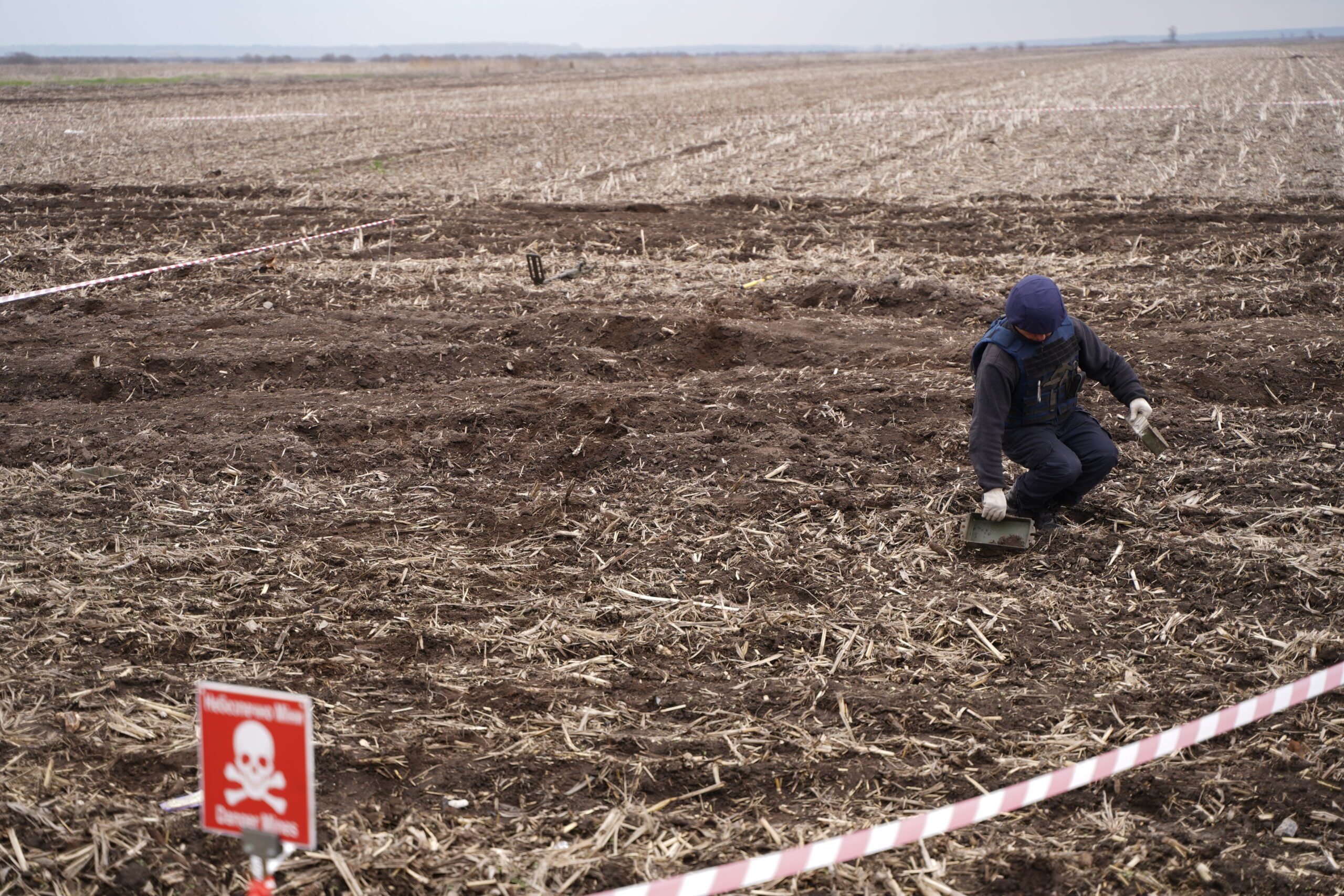
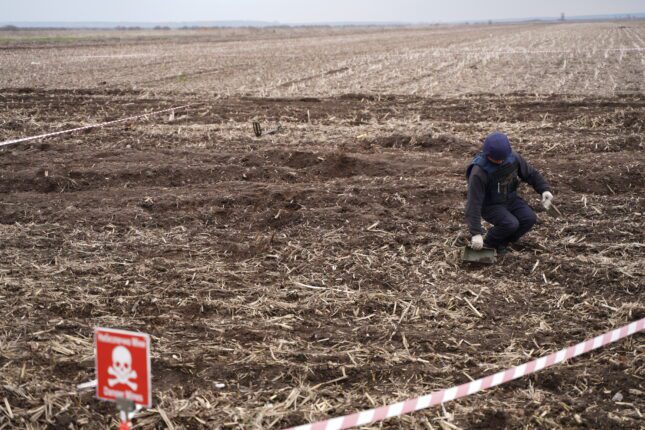
Despite these limitations, Sarah Njeri, lecturer at the University of London, highlighted an opportunity for environmental peacebuilding researchers in this notable shift. She emphasized that “mine action and environmental security are deeply interrelated as an extension of violence in post-conflict contexts, and in terms of how they degrade ecosystems, undermine livelihoods, and complicate climate resilience in post-conflict settings.” Pointing to a need for technology that speeds up the work of clearing landmines and explosive remnants after conflict and suggesting that land restoration is an area in which environmental peacebuilding intersects with growing security spending.
Resource Security: Increased Demand for Critical Minerals and Water
Last year’s session correctly identified resource governance as an emerging challenge, and the demand for critical minerals significantly increased in 2025. Greenland saw warming expose previously inaccessible oil, gas, and critical minerals, both increasing their economic value and driving the Trump Administration’s interest in acquiring the island. This convergence of climate change, mineral demand, and strategic competition is emblematic of a broader shift toward resource-driven geopolitics.
Geoff Dabelko, Professor at Ohio University’s Voinovich School of Leadership and Public Service, observed that “there is renewed urgency around some of the issues that the environmental peacebuilding and environmental conflict linkages have been a focus of, such as points of extraction for mining, minerals, and metals.” He added that the rising discourse around points of extraction is tied to a diversity of factors working together to spur demand for these minerals: “From geopolitical drivers down to tremendous demand for those inputs coming from things associated with the energy transition and climate change, and a revival of traditional security demands.”
Water also is emerging as an equally contested frontier. At a moment when global water governance was already becoming a central concern in peacebuilding, the rapid expansion of artificial intelligence has further escalated competition for water through the growth of data centers that run on the intensive use of energy and water.
This development raises pressing questions for global water governance. Swain observed that some countries will suffer more from the environmental and social costs of such growth, while others will benefit more. Environmental peacebuilding practitioners and researchers may find that this becomes a focal point in the coming year, as emerging research on AI’s demands on water may amplify governance challenges and political contestation surrounding these resources.
Governance: The Future of Consensus-Based Models
In response to the challenges involving global cooperation on peace and environment, Carl Bruch, the Director of International Programs at the Environmental Law Institute. predicted “a shift from an emphasis on global consensus to [agreements between] like-minded actors (countries, subnational units, corporations, NGOs).” He cited the Montreal Protocol and the Extractive Industries Transparency Initiative as examples of “very good precedence” for such models.
Bruch also noted that a smaller-scale collaboration is already gaining traction, with “Brazil highlighting a two-tier negotiation process as an option” that allows countries to “go far beyond what consensus would allow.” He also recommended grounding reform efforts in a strong evidence base, rather than in the values-based policy arguments previously depended upon by policymakers. If strategically leveraged, a challenging moment in cooperation may compel practitioners to reimagine how to argue for reform and generate solutions outside the limitations of consensus-based models.
Opportunities for Inclusive Restructuring in Research
Multilateral institutions will continue to reduce capacity in 2026. The World Health Organization plans to reduce staff by about 25 percent by mid-2026, while the United Nations secretariat warns of an imminent 15 percent reduction in its budget expenditure. Bruch explained that cuts of this scale deprioritize work that merely intersects with institutional mandates without being their central pillars. This trend directly impacts environmental peacebuilding, which is an inherently intersectional field.
Njeri stated that despite “research being conducted with little or no funding at all, we are seeing work that is promising.” Local actors fill the gaps left by broader funding withdrawals, which enables something previously impossible: “a reposition[ing] of local and global actors as knowledge producers and policy shapers, rather than being passive beneficiaries.”
Notable examples include the Norwegian People’s Aid and the Conflict and Environment Observatory (CEOBS) Green-Field Tool, which provides environmental management measures to mine staff on the ground, as well as a forthcoming CEOBS collaboration with the European Citizen Sciences Association to enable researchers to draw otherwise inaccessible data in live-conflict environments.
Reductions in funding and institutional capacity do pose clear constraints, but they also may allow the field to cast off the limits imposed by top-down funding models, and encourage a more diversified approach to financing which well increased the overall future resilience of the field.
The Year Ahead Promises Opportunity Within Constraints
The webinar panelists highlighted the possibilities created by transforming constraints into opportunities to disrupt the consensus-based and top-down funding models that shape research priorities and restrict solutions. Finding intersections between defense funding and environmental peacebuilding, centering impacted communities, and illuminating water governance as a focus area will prove essential activities for the upcoming year.
These experts argued that 2026 could be a year of positive disruption and restructuring, during which creativity enables the field not only to navigate the powerful new constraints, but thrive within—and despite—them.
Karishma Goswami is a John Gardner Public Service Fellow from the University of California Berkeley, currently placed at the Environmental Law Institute. She holds a bachelors in Society and Environment, with a minor in Public Policy.
Madeleine Loll is the Gender Administrator and a volunteer at The Environmental Peacebuilding Association. She holds an MA in Human Rights from University College London.
Sources: CEOBS; EITI; Environmental Law Institute; Environmental Peacebuilding Association’ European Citizen Sciences Association; Global Policy Forum; IISS; ISDP; NPAID; Reuters; SOAS-University of London; Swedish Defence University; Time; UNEP
Photo Credits: Licensed by Adobe Stock.
 A Publication of the Stimson Center.